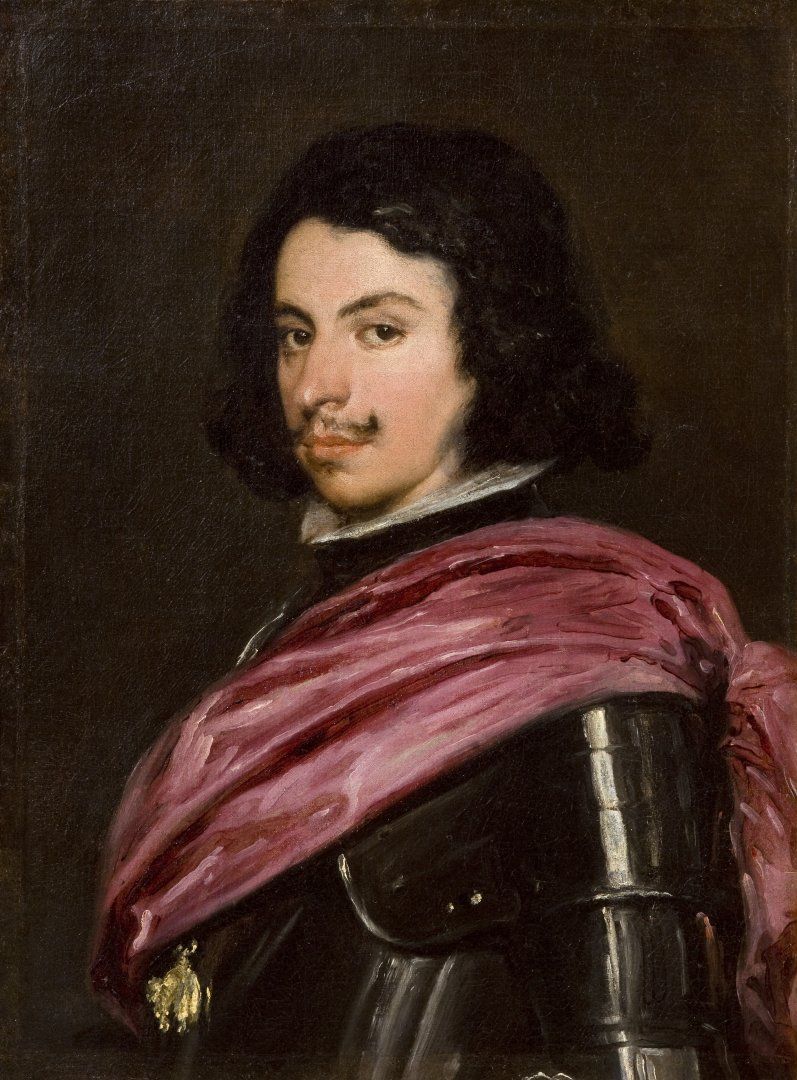
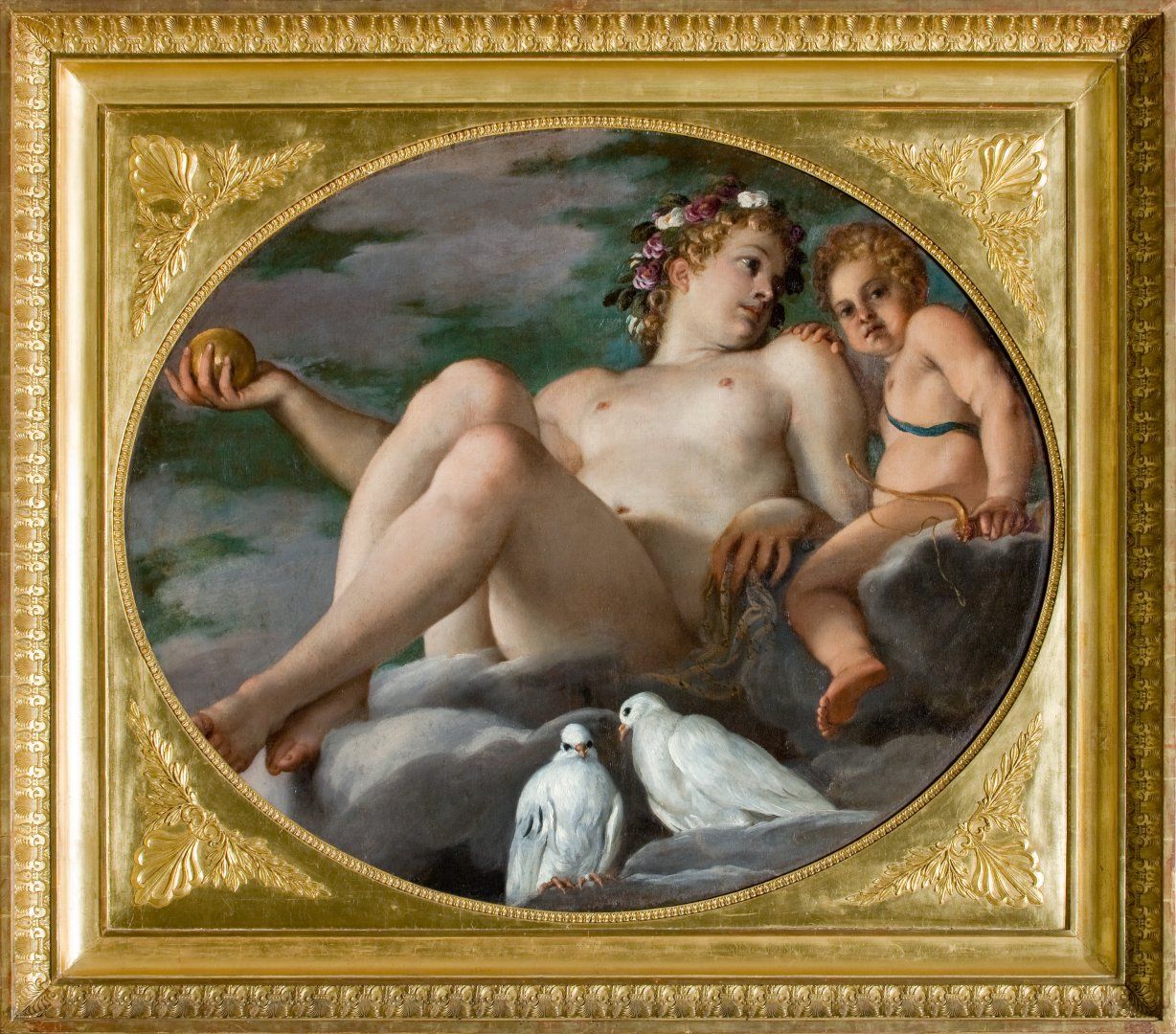
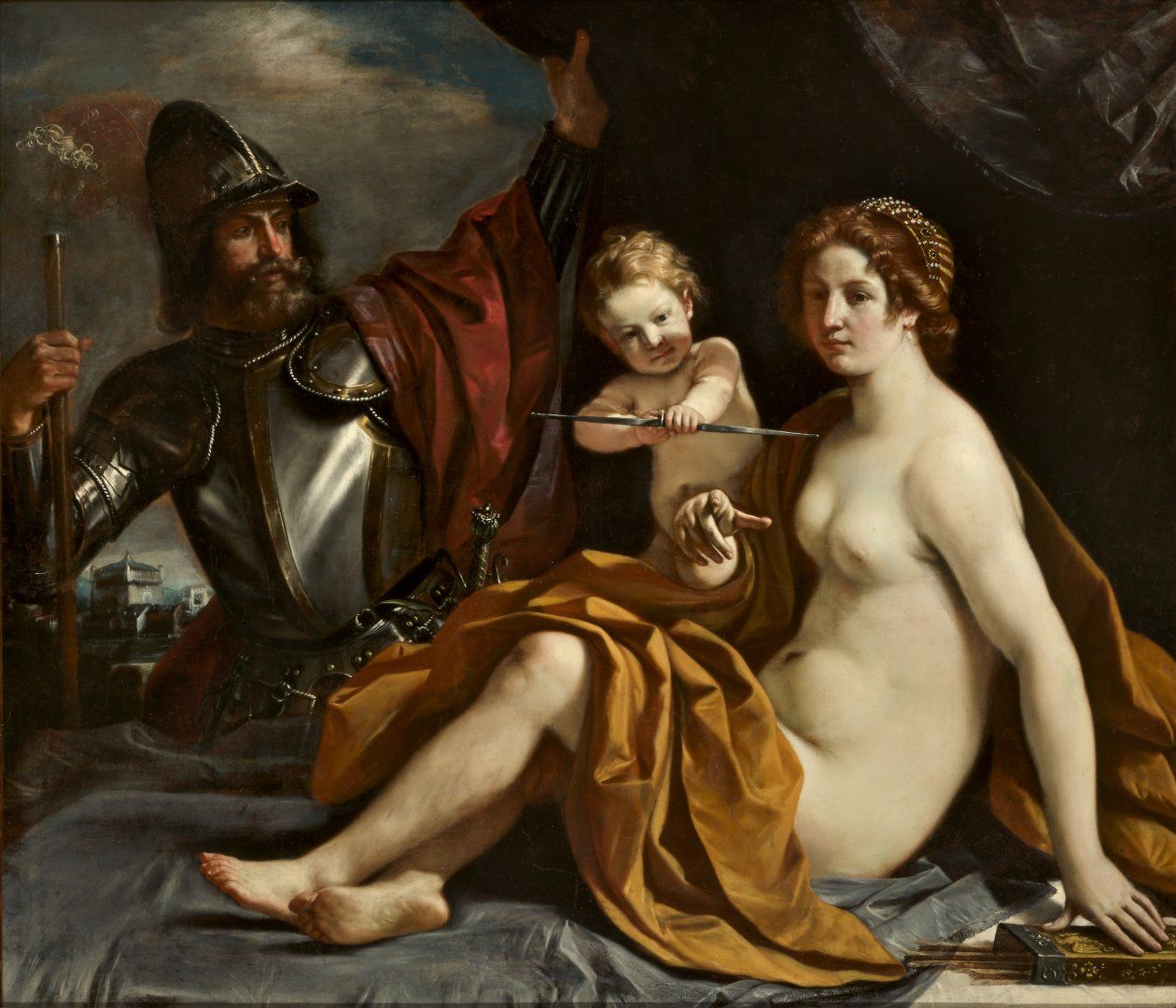

The work was commissioned to Guercino (1591-1666) by Francesco I d'Este for his personal collections. For its composition it is considered one of the most peculiar of the production of the master of Cento and in general of the painting of fabulae (with mythological subject) of the Emilian seventeenth century. The depiction of Venus, Mars and Love, god of War, represented in an essential and close composition is a topos consolidated since the mature Renaissance. To make the representation and the frontality of the characters more peculiar, especially of Love, which stretches the arch exactly in conjunction with the ideal spectator, originally the client Francesco I, today the visitor who is about to enjoy the work in space and in the context of the museum.