

Displayed in:
Romagnoli Palace
Via C. Albicini, 12, Forlì
Open now from 09:30 to 19:00
Verified profile
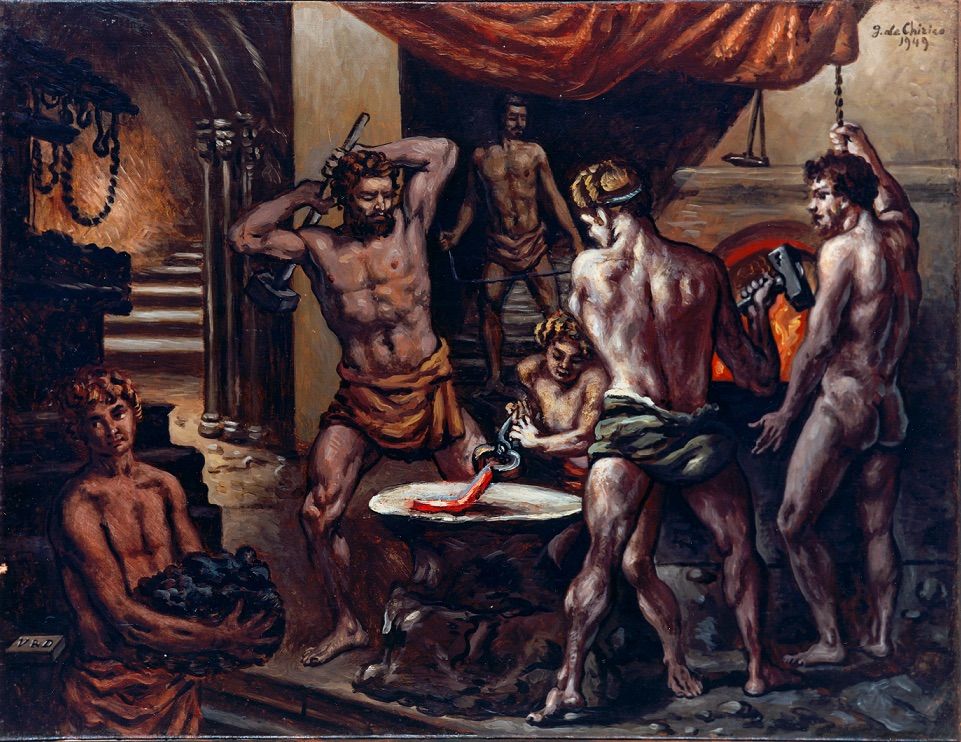
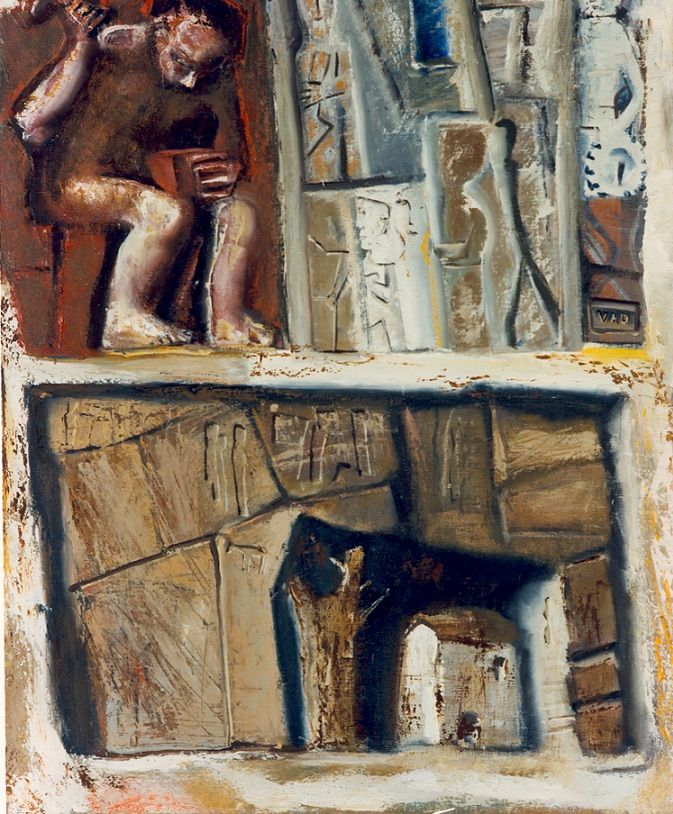
De Chirico takes up here a subject of classical mythology. Vulcan, god of fire, is depicted in his forge together with his helpers, intent on forging weapons for the gods and heroes. The plastic nudity of the violently chiaroscuro bodies is striking.
“In my painting I tried to stick to the classic systems of composition and chiaroscuro. I was mainly inspired by Rubens and Velasquez, trying to concentrate the greatest light in the center of the painting and to balance the movements of the characters and the lines of the composition in order to form a harmonious and monumental whole at the same time. I also looked for the preciousness of the material; that is, in addition to the intrinsic quality due to the kind of oil-resinous substances used, also those particular characteristics of transparency, internal luminosity, of mixture units, which have always been the prerogative of the great ancient painters and of which today even the memory has been lost . It is only in this way that painting can be brought back to the level of «true art» ”. (G. de Chirico, 1949)
Texts: Lorenza Montanari, Martina Neri - Museum Unit of the Municipality of Forlì
Title: Forge of Vulcano
Author: Giorgio de Chirico
Date: 1949
Technique: Oil painting on canvas
Displayed in: Romagnoli Palace
All ongoing and upcoming exhibitions where there are works by