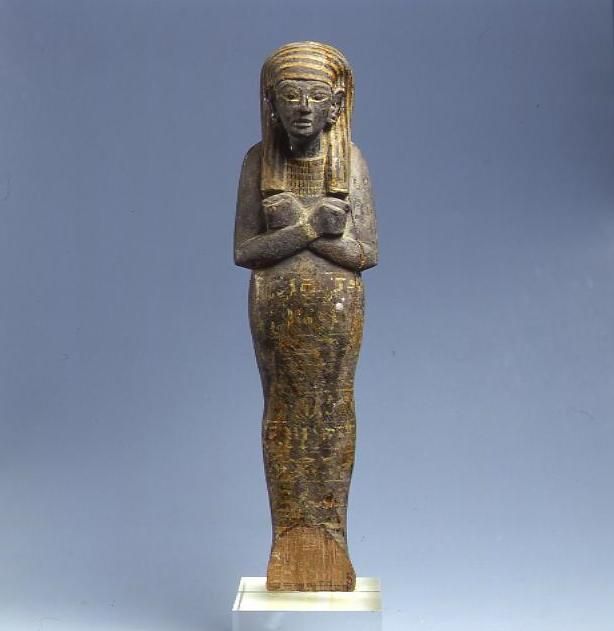
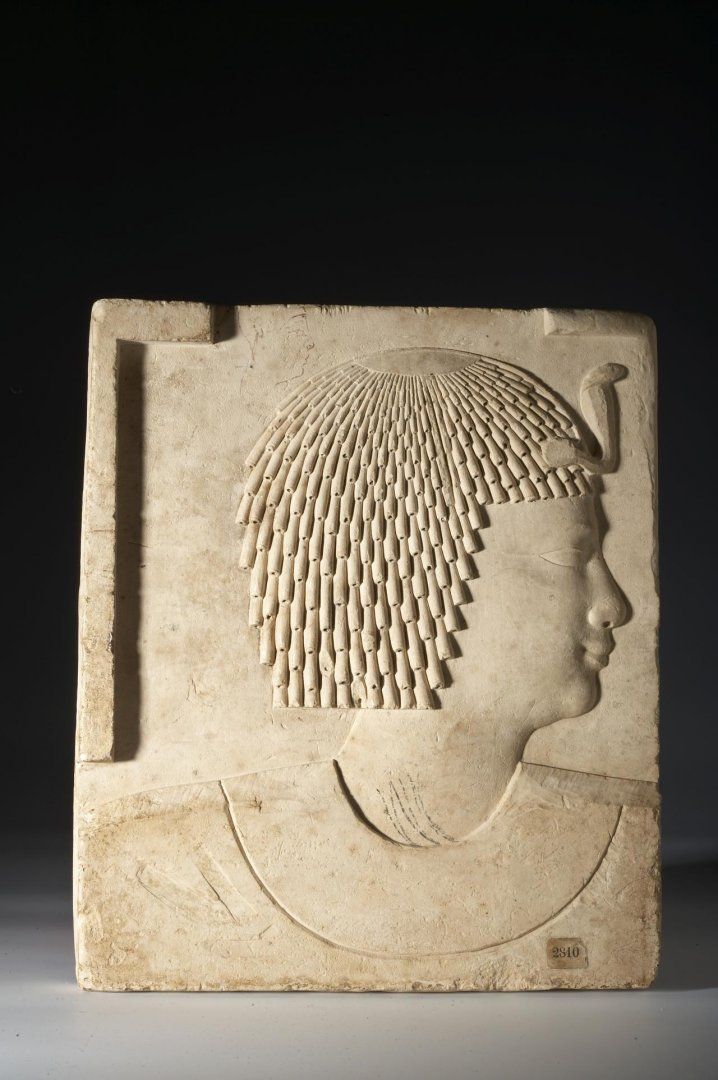
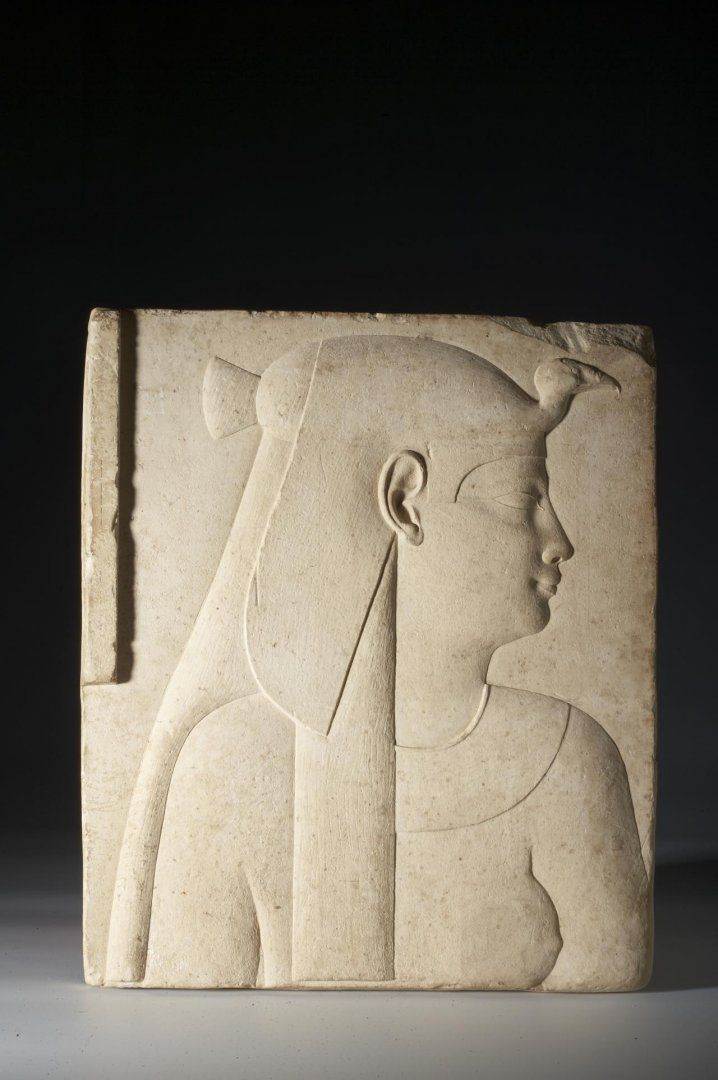
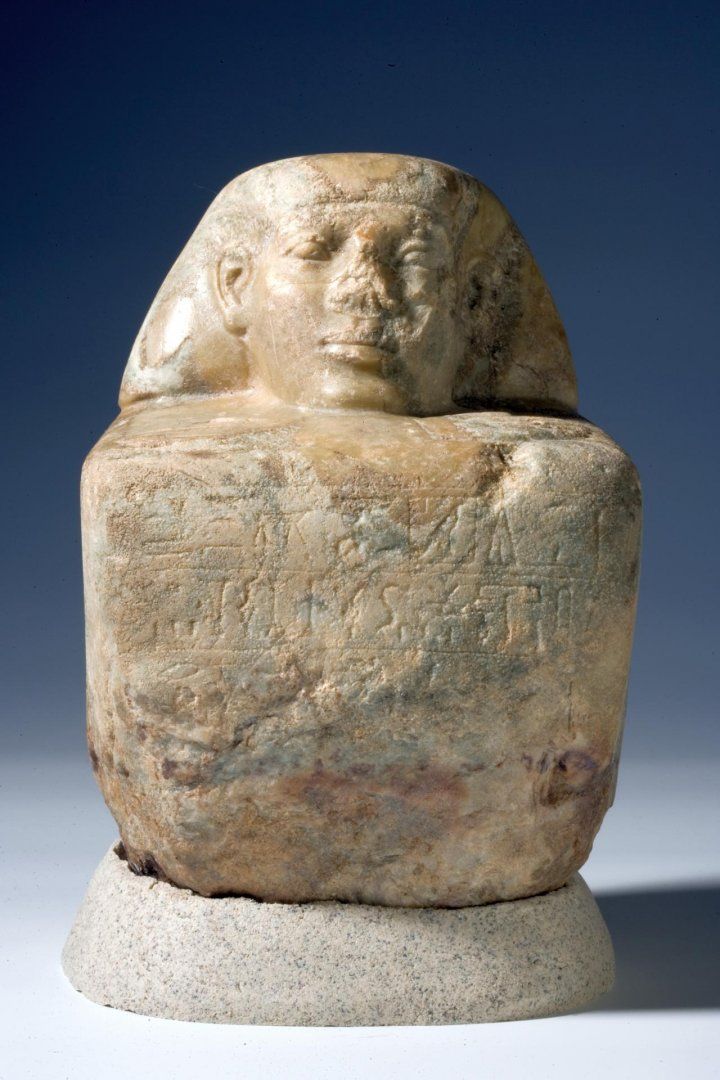
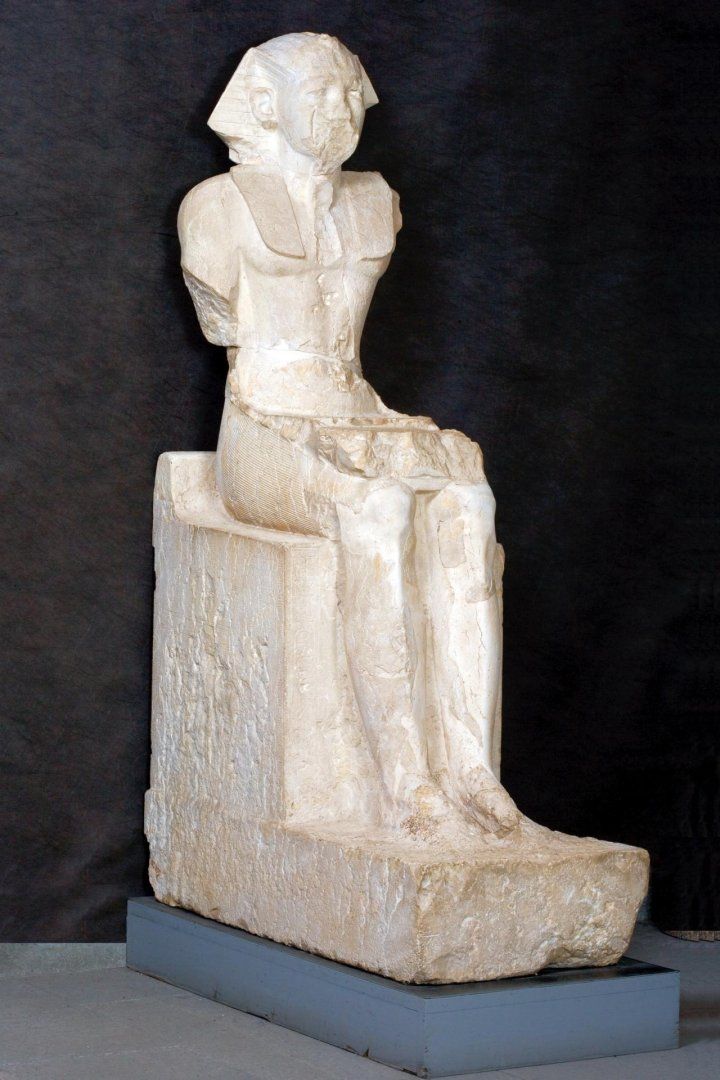
The two valuable statuettes, with a mummiform appearance, belonged to the funerary equipment of the physician-priest Imenmes Serket Enchanter (scorpion goddess). The almond-shaped eyes, elongated face, and full lips recall the art that emerged during the reign of Akhenaton (1351-1334 BC) and continued in the immediately following period. The ushabty, which means "answerer," had the task of responding on behalf of the deceased to the call to work in the fields of Osiris, located in the Afterlife. Placed in the tombs of both royals and private individuals starting from the Middle Kingdom, initially they were unique specimens, but over time their number grew until, in the late New Kingdom, it reached the (ideal) number of 365 ushabty, one for each day of the year.