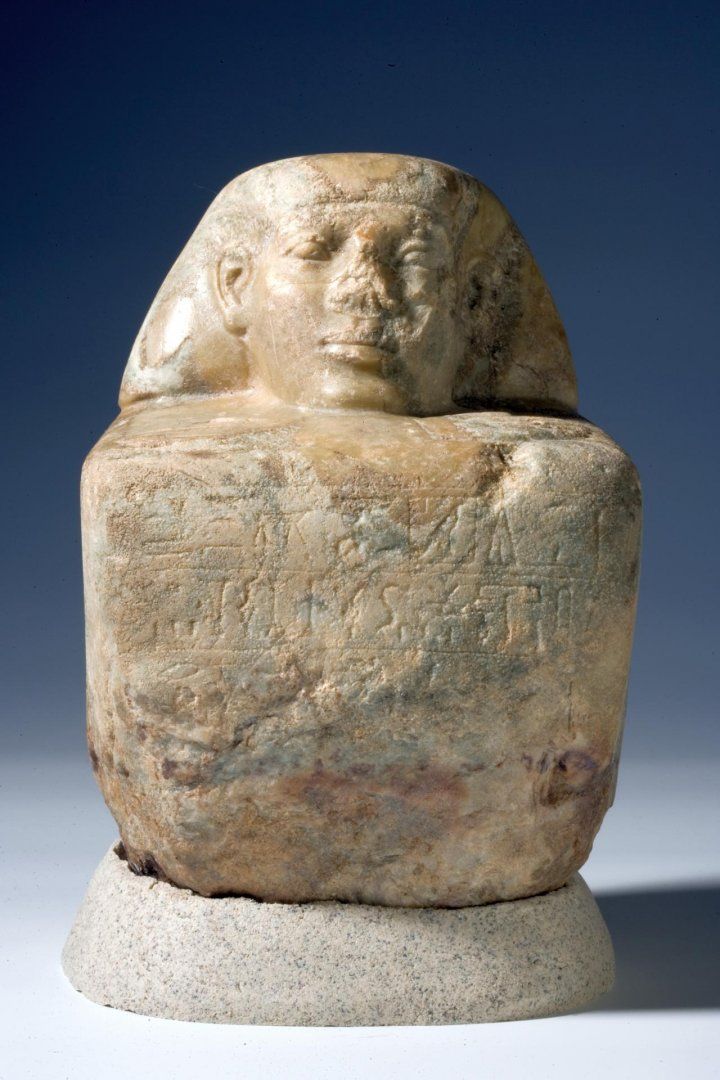
The cube statue, one of the recurring types in private statuary, is a stylized representation of a crouching figure with knees to the chest and wrapped in a tunic, with the head standing out in the round. The hands, and more rarely the feet, are instead sculpted in relief. The large flat surface of this type of sculpture is generally covered with inscriptions related to the worship and life of the commissioners, mostly individuals who held important religious and civil positions. In the Milanese cube statue, the inscription, unfortunately incomplete, contains an invocation to the goddess Hathor by the owner of the statue, anonymous, as the name has been lost in the gap of the text. The stylistic rendering of the wig and facial features lead to dating the sculpture to the Third Intermediate Period, more specifically, probably to the XXV dynasty (746-655 BC).