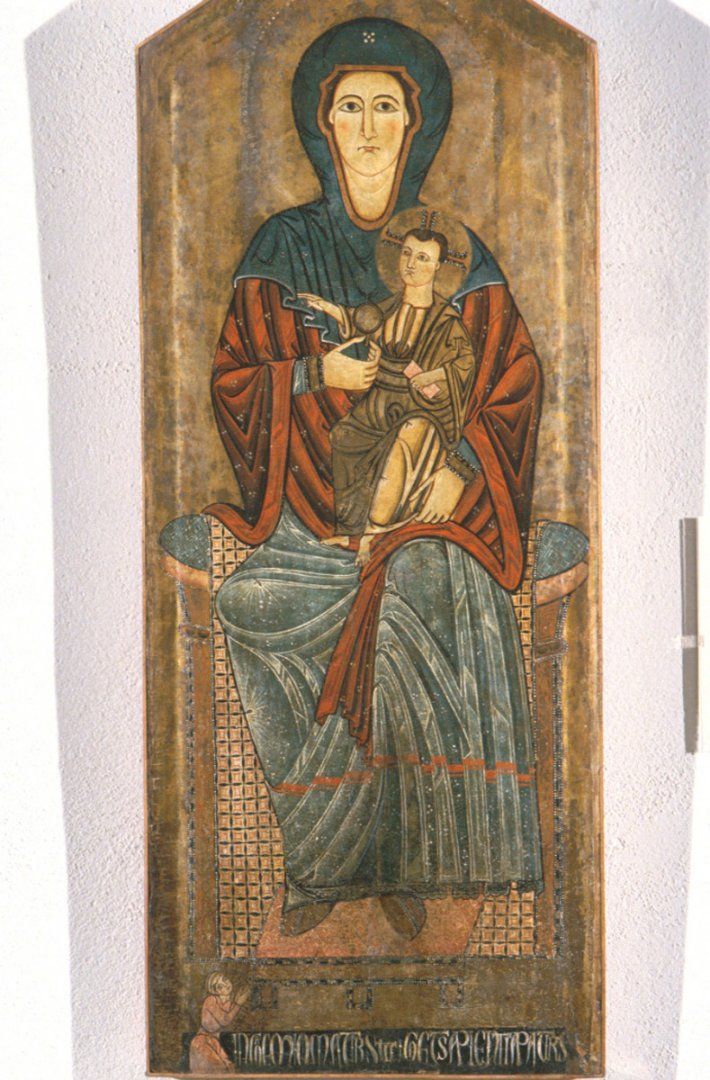
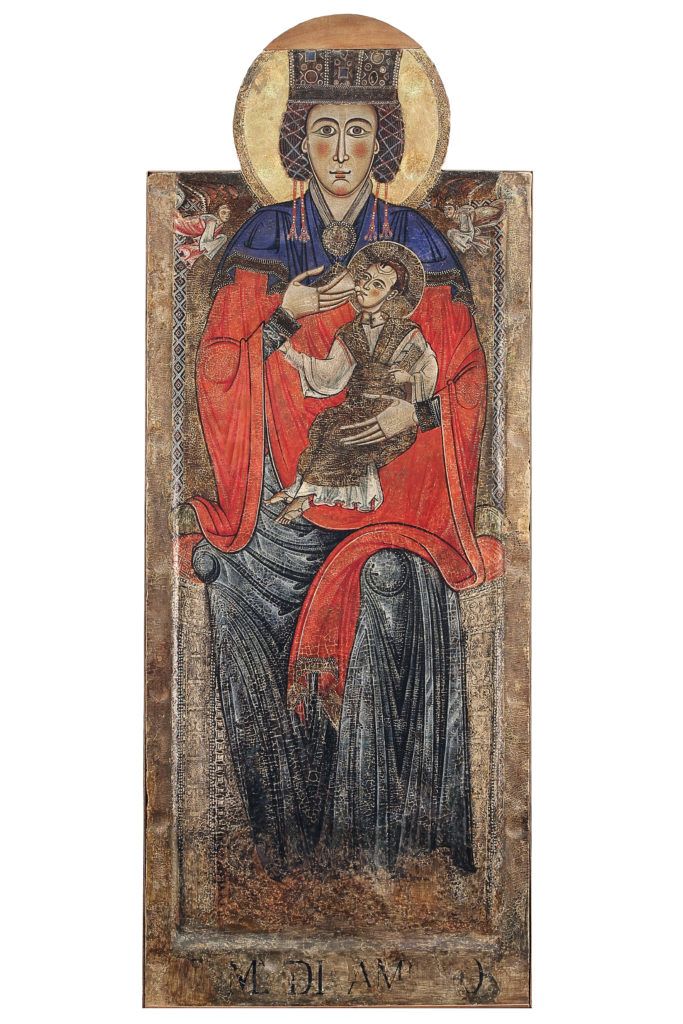
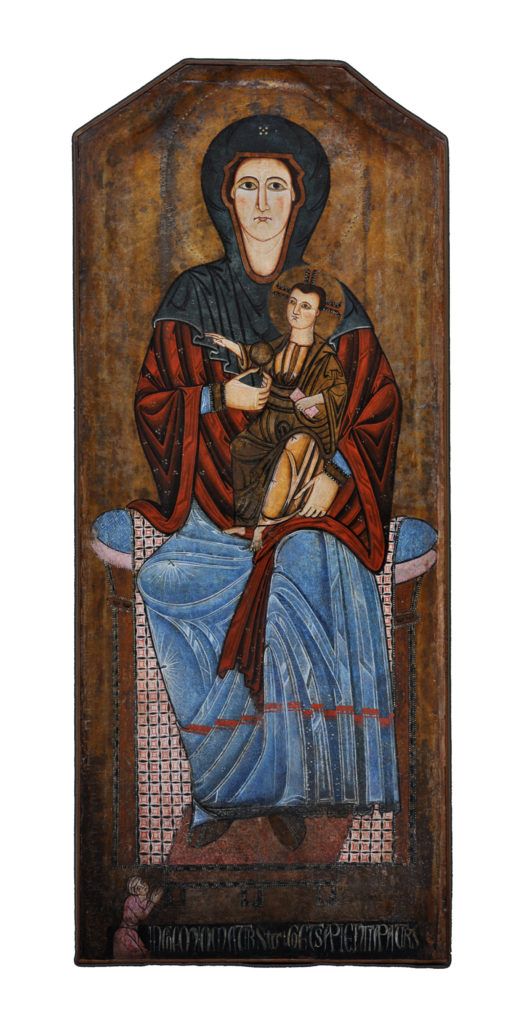
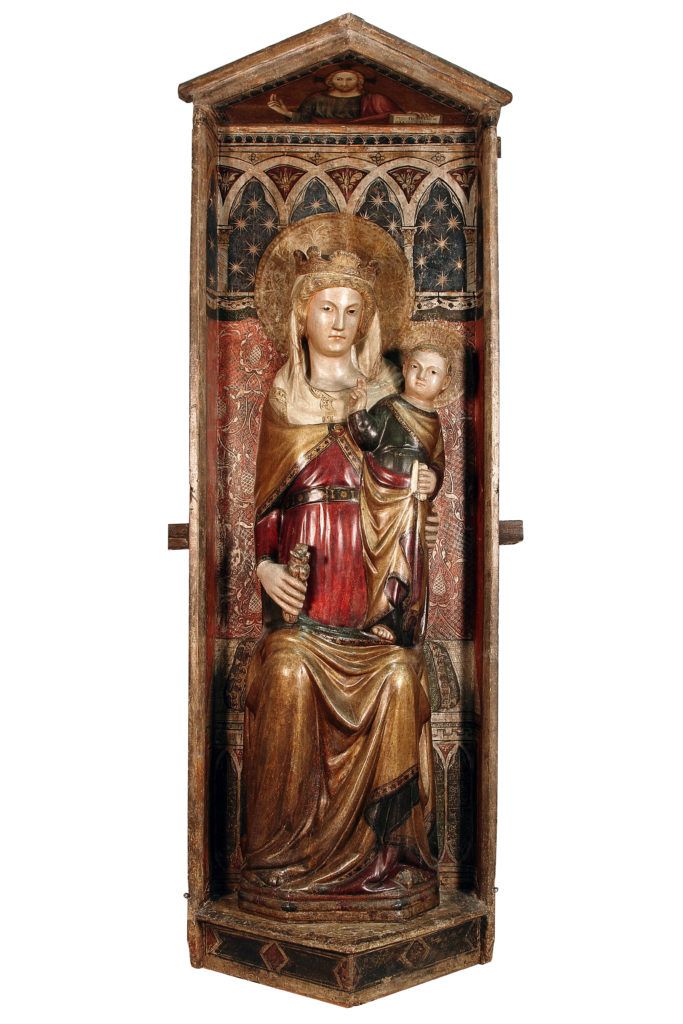
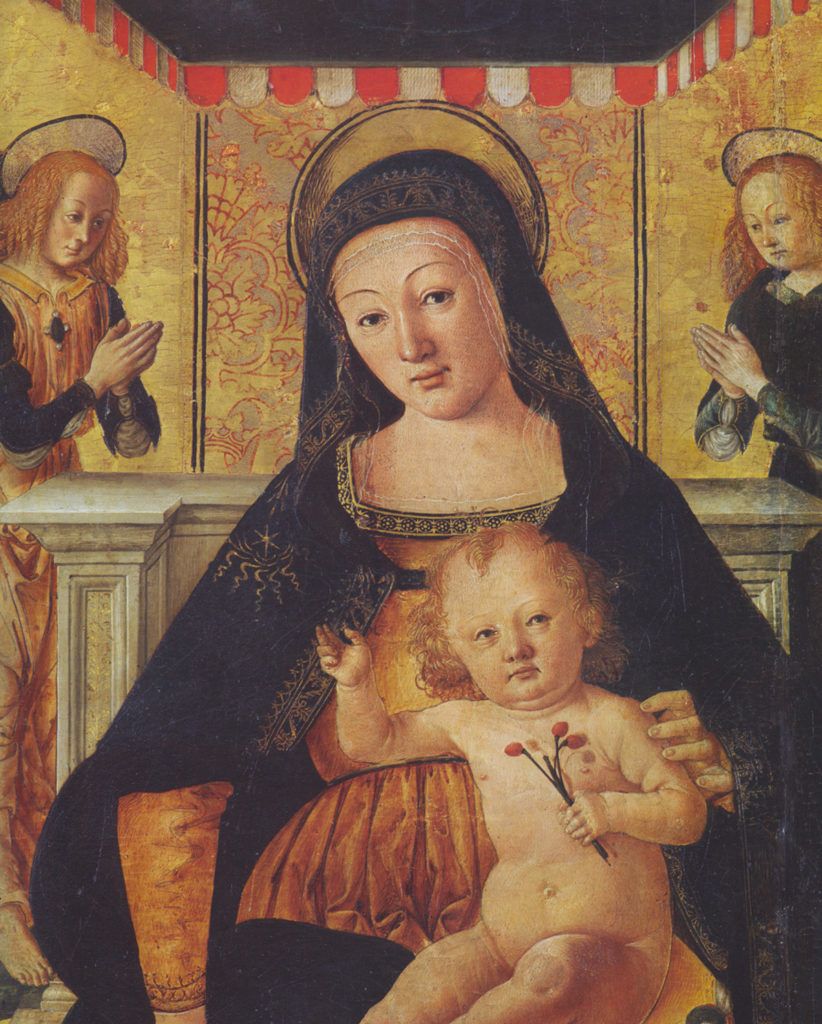
The seated Virgin, perfectly frontal, wears a red tunic and a golden cloak with black decorations on the edge. She has bipartite hair that can be seen below a white veil that falls over her shoulders. On his head he wears a crown. The Virgin supports with her left hand, standing on her knee, the blessing Child, who wears a green tunic and a golden mantle. The group is contained within a triangular tabernacle decorated in the upper part by an arching with a starry sky, in the middle part by a red and silver damask drape as a backbone and in the lower part by a Cosmatesque type seat on which the Virgin seems to sit on. On the lost doors that originally closed the tabernacle were depicted, on the right: the Crucifixion, the Flogging and the Kiss of Judas, on the left: the Annunciation, the Adoration of the Magi and the Presentation in the Temple, the only remaining panel and currently preserved in the Museum. The work is attributed to an unprecedented pictorial personality indicated by the conventional name of Maestro di Fossa, active in southern Umbria and Abruzzo in the first half of the fourteenth century. The stolen doors that closed the tabernacle were painted with stories from the life of Christ. Left: The Annunciation, The Adoration of the Magi, The Presentation in the Temple; right: The Crucifixion, The Flogging, The Kiss of Judas. Only the fragment with the scene of the Presentation in the Temple which is exhibited in the Museum has been recovered. Even the panels have been attributed to the Maestro di Fossa, who was later combined with various works present in Spoleto and in private collections.