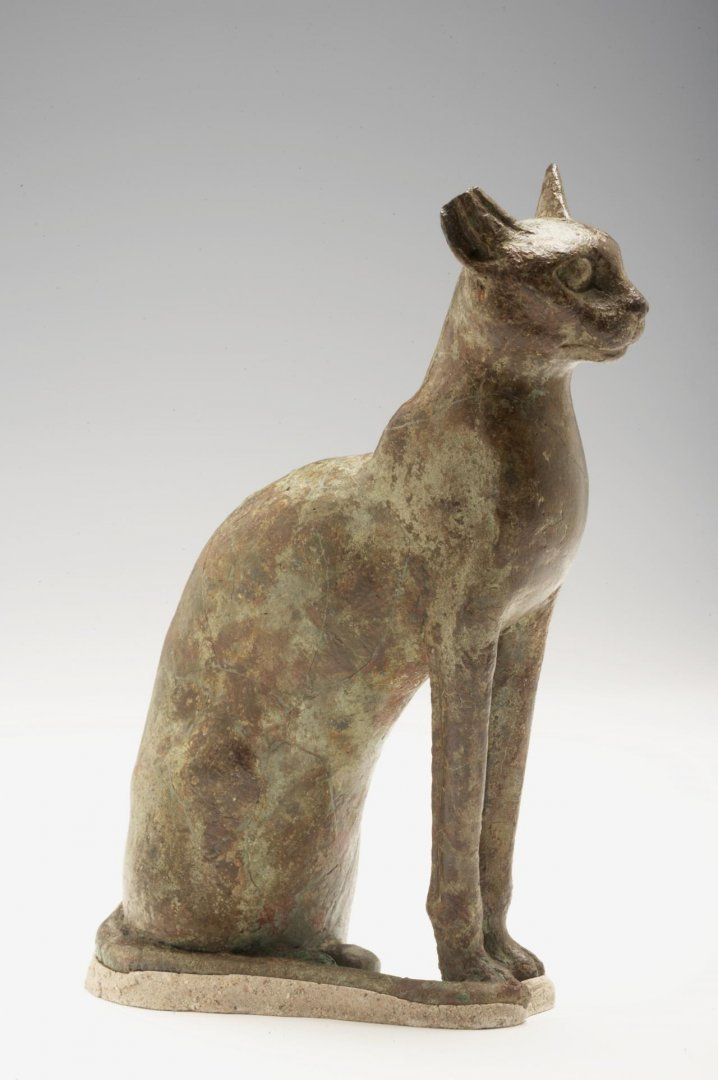
In the vast and complex repertoire of Egyptian deities, the cat, although identified with various goddesses, is particularly associated, starting from the 10th century BC, with the goddess Bastet, whose main cult center was in the Delta, at Bubastis. The goddess, initially represented as a lioness-goddess, in her cat form was a symbol of femininity and protected the domestic hearth. Statuettes and mummies of the small animal, often inserted in hollow bronze figurines, were offered to the goddess by her devotees to win her favor. With the introduction of the lost wax technique, which replaced the older bronze working with hammered sheets, starting from the New Kingdom (16th century BC) and especially during the Late Period (7th-4th century BC), Egypt saw the beginning of a serial production of statuettes of deities in their various aspects.