













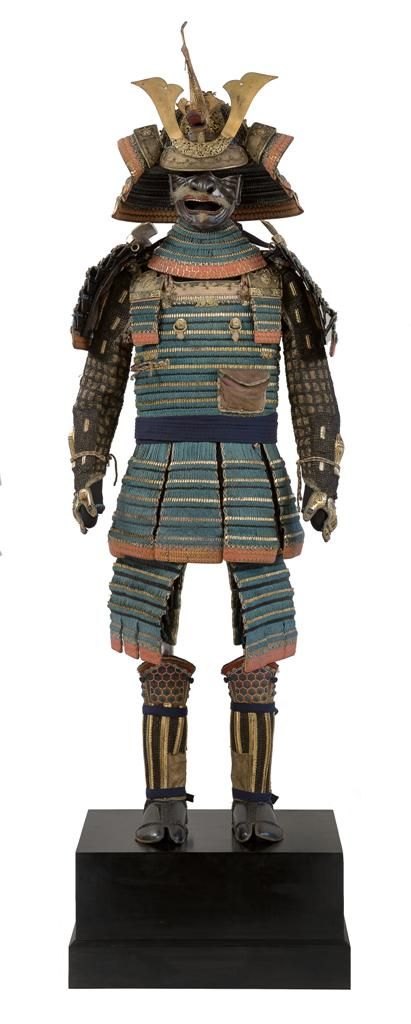
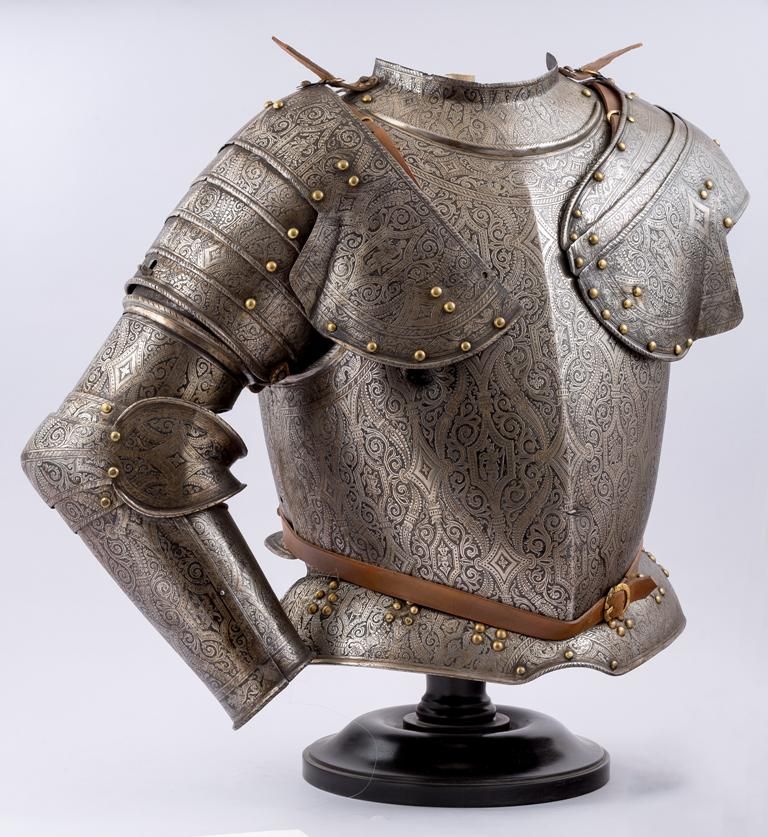
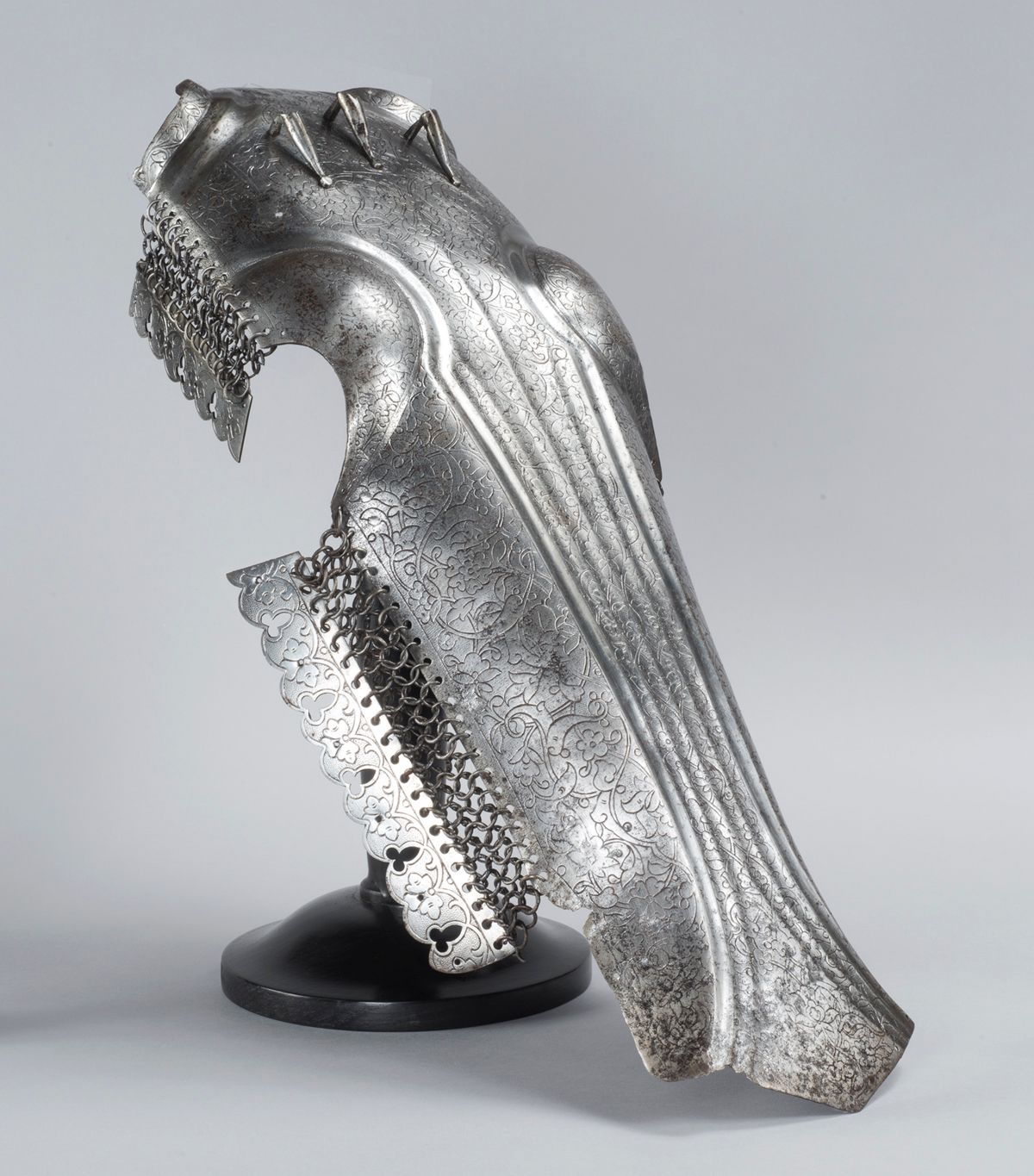



The Japanese armor is composed of an assembly of heterogeneous materials: metal, leather, fabric, lacquer, silk, golden metal plates. Its parts, joined by silk ribbons, are articulated in a sturdy but flexible whole that did not force the samurai's body into a rigid structure, to ensure, in addition to protection, a considerable freedom of movement. The armor is made according to the do-maru type, a light defensive equipment attested in the thirteenth-sixteenth centuries for the battle on foot. It was intended for a high-ranking person, as evidenced by the use of precious materials such as silk and lacquer which, thanks to the characteristics of resistance, elasticity and impermeability, help to make it a combination of elegance and functionality. It is one of the three complete Japanese armours that became part of the oriental collection of the Royal Armory within the second half of the nineteenth century. It was donated in 1869 to King Vittorio Emanuele II by Emperor Meiji following the signing of the friendship and trade treaty between the Kingdom of Italy and Japan. In anticipation of the rearrangement in the Armory Rotunda (2016), the armor was subjected to a careful restoration and equipped with a special support structure, designed to distribute the weight of the various elements in a calibrated way and to avoid the deterioration of the different elements. materials.